Insight
Practical Strategies for Implementing AI-Based Policy Analysis to Streamline HR Regulation Updates and Reduce Compliance Risks
Nov 27, 2025


Why Is HR Policy Document Management Becoming Increasingly Difficult?
Identifying the Most Up-to-Date Versions of Scattered Documents by Department and Time
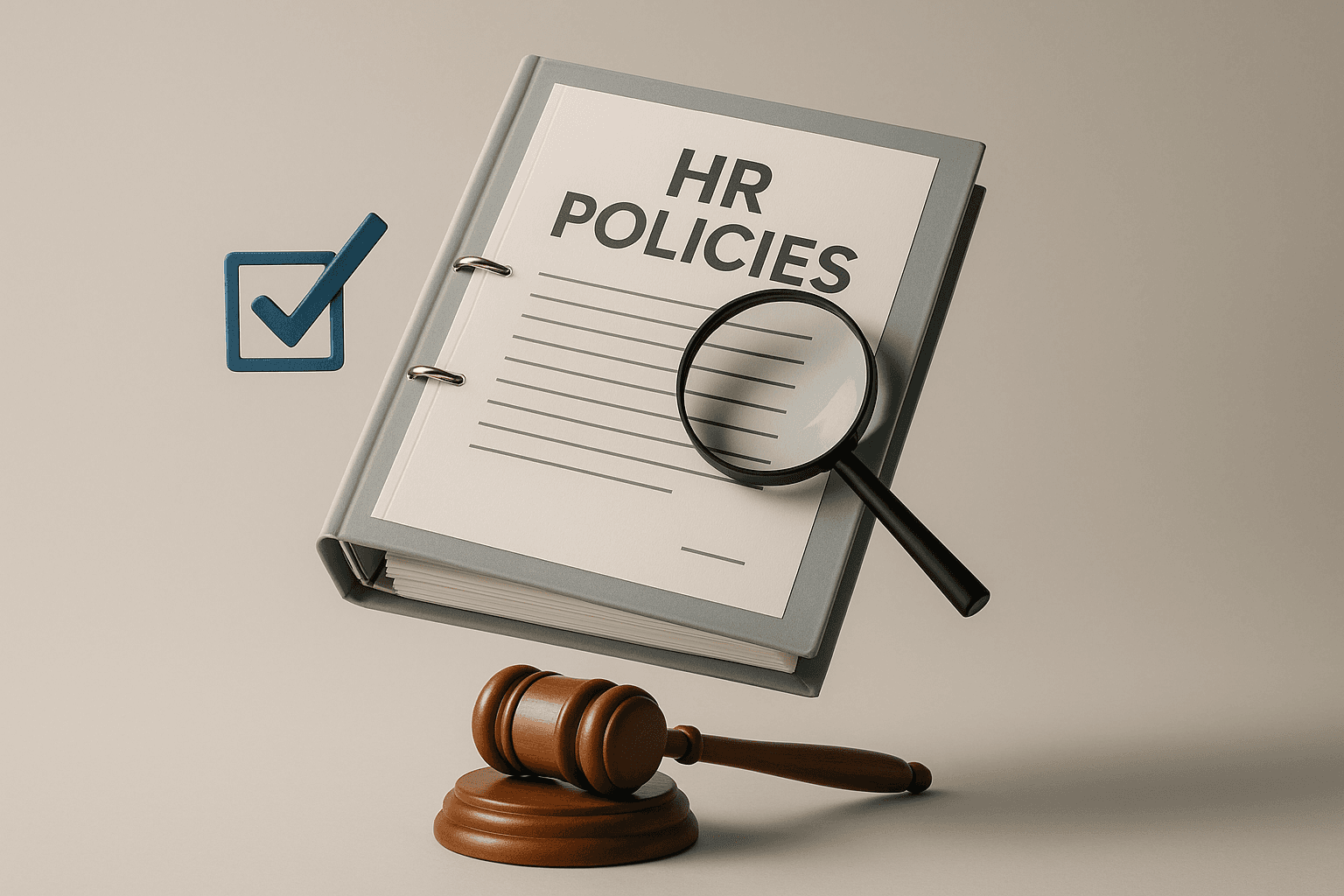
HR-related documents such as employment terms, work regulations, personnel systems, and codes of ethics are created and managed by dozens of departments and various policy owners. As a result, multiple versions of similar documents exist over time, and it is common for the documents registered in the HRIS to differ from those actually being used. This inconsistency makes it difficult to identify the most current version and undermines the reliability of policy operations. Furthermore, document titles or filenames often don’t reflect content, forcing managers to open and compare files manually—a burdensome process.
Storage locations are also complex. Documents are scattered across personal PCs, collaboration tools, and shared drives, making it difficult to manage the entire policy system consistently. In some cases, older versions are retrieved first, confusing users and increasing the risk of applying outdated rules.
Legal Amendments and Conflicts Between Internal Policies Increase Risk
Labor laws such as the Labor Standards Act, Gender Equality in Employment Act, and Personal Information Protection Act are updated annually, and internal HR policies must be updated accordingly. If legislative changes are not properly reflected or conflict with internal policies, organizations face legal risks during audits or disputes. Multinational companies, in particular, face even greater challenges in maintaining consistency between country-specific regulations and global corporate standards.
There are also cases where country-specific laws conflict with headquarters’ policies or where translation errors lead to misinterpretation. For example, the same leave policy may be mandatory in one country and optional in another, causing confusion in local HR operations. These discrepancies increase both operational confusion and legal risk when adhering to headquarters’ standards.
How Policy and Regulation Document Automation Works
AI Breaks Down and Classifies Documents by Clause
Ryntra’s policy analysis AI automatically breaks documents into individual sections and classifies the topic and nature of each clause. For example, an HR policy might be divided into "work rules," "leave policy," and "disciplinary grounds." By comparing with previous versions, the AI tracks whether each clause has been retained, deleted, or modified. Each clause is assigned an identifier (ID) so that it can be referenced or cited across related documents.
This logic applies to documents in various formats such as PDF, HWP, Word, and HTML. Even incomplete documents or scanned files requiring OCR processing are handled with advanced preprocessing algorithms to ensure consistent structure and accurate comparisons.
Mapping Clauses to Legal and Internal Standards to Automatically Detect Discrepancies
The AI compares clauses against embedded legal standards and custom internal policy templates. For example, if a clause on parental leave does not comply with the statutory minimum of "one year guaranteed," the system flags the discrepancy, provides an alert, and explains the issue. The AI also scans other documents to identify where such clauses are missing and recommends necessary inclusions.
Users can define custom rules such as “All documents regarding national pension contributions must be reviewed quarterly,” allowing organizations to maintain consistency not only with legal requirements but also with internal operational standards.
Tracking Version Changes and Consolidating Similar Regulations
When a policy has gone through multiple revisions, the AI tracks which clauses changed, when, and how—at the section level. If similar clauses appear across different documents (e.g., remote work rules existing in both work regulations and a separate operations policy), the system merges and analyzes them to detect duplication or conflict. It also generates a consistency score for similar clauses, helping prioritize standardization tasks.
This allows HR teams to reduce redundant documents and streamline internal policy structures more efficiently.
Benefits: Boosting HR Operational Efficiency and Ensuring Compliance
Shorter Time and Fewer Errors in Managing Policy Currency
By automatically comparing documents to the latest legal and internal standards, the AI reduces manual verification time by more than 70%. HR policy managers can check for updates in real time and drastically reduce the potential for human error. Change histories and policy update statuses are logged for easy reporting and audit preparation.
The system can also log policy-specific review cycles and generate alerts or reports as needed, shifting policy management from a reactive to a proactive approach.
Preventing Risks by Detecting Redundant or Conflicting Clauses in Advance
When similar or conflicting clauses exist across documents, the AI detects and reports them. For example, it can assess whether the "annual leave use promotion system" conflicts between two policies and recommend which clause should take precedence. If departmental guidelines differ from headquarters’ policies, the AI generates comparison reports that clarify and communicate the risk.
This early-warning system proves valuable for union negotiations, audits, and legal risk prevention.
Automatically Generating Employee Notices and Training Materials Based on Changes
Ryntra can automatically generate notices, training materials, and FAQs centered on updated clauses. For instance, if a new flexible start/end time system is introduced, the AI generates background explanations, target audiences, and instructions for use. These resources can be published directly to internal portals or used in training. LMS integration enables tracking of employee acknowledgment and training completion.
Automated learning materials not only reduce HR’s workload but also accelerate internal adoption of new policies across the organization.
Key Strengths of Ryntra’s Policy Analysis AI
Protecting Sensitive Data in a Local Document Analysis Environment
Ryntra runs in a local environment (on-premises or internal network), enabling organizations to automate policy analysis without sending sensitive HR data outside the company. It meets global compliance requirements like GDPR and ISO27001 and is designed to satisfy audit requirements for organizations preparing for security assessments.
Ryntra comes with built-in security features like backup, encryption, and access control. It also logs all policy changes for traceability and audit purposes.
NLP Engine Optimized for Korean Legal and Policy Language
Ryntra’s NLP engine is fine-tuned to handle the complexities of Korean regulatory language. It can accurately interpret compound clauses, mixed conditions and exceptions, and even process documents containing Hanja or HWP files. This ensures deeper understanding of real-world policy documents and helps prevent semantic inconsistencies.
It also supports rule-based analysis of non-standard expressions (e.g., “may,” “should endeavor to”) to determine the legal strength of each clause.
Seamless Integration with HRIS and Internal Portals
Ryntra’s analysis results integrate with HRIS, internal policy management systems, and cloud collaboration tools via APIs. Updates can be reflected in real time, and the solution fits naturally into existing document review cycles. Integration with platforms like SharePoint, Google Drive, and Jira supports end-to-end version control and document approval workflows.
Ryntra supports RESTful APIs, SFTP, and Webhooks, ensuring interoperability even in high-security cloud environments.
Conclusion: A Strategic Choice for HR Teams to Stay Agile in a Changing Policy Landscape
Reducing Compliance Risk and Increasing Operational Speed
As policy update cycles accelerate and regulatory complexity grows, HR teams can no longer manage everything manually. AI-based policy analysis tools reduce repetitive tasks, prevent compliance risks, and help HR operate faster and more precisely. Reducing workload and enabling proactive responses to change are essential for future-ready HR operations.
In an environment where corporate strategies and HR policies evolve rapidly, an AI-powered regulation management system is not a luxury—it’s a necessity.
Build a Smart Policy Analysis Framework with Ryntra
Ryntra offers a practical path to digital transformation in policy management. From document collection and clause classification to standard comparison, version tracking, change alerts, and employee communication—Ryntra delivers a full workflow for smart, AI-driven policy analysis. Let Ryntra help elevate your HR team to the next level. Begin automating the repetitive, refining policy execution, and systematizing compliance response—today.
Recommended Content